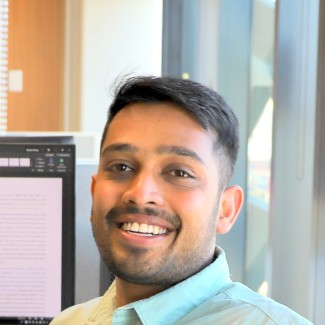
Ben Sims has 13 years of experience in more than ten countries across Asia and the Pacific. Ben is an expert in climate finance, public financial management, investment planning, climate risk assessments, adaptation planning (asset, community, sector and national levels), policy and institutional design and reforms, and the development of sectoral and national strategies and plans.
Ben has provided consultancy services for government agencies and international organisations, including SPREP, ADB, World Bank, Global Green Growth Institute (GGGI), UN Environment, UNDP, UNDRR, the Commonwealth Secretariat, and the Government of New Zealand. Recent consultancies are summarised in this profile - my full consultancy record is provided in my CV.
Ben’s recent work in the Pacific includes leading the development of the PNG National Climate Finance Strategy and PNG GCF Country Programme; completion of climate finance training for government agencies in Fiji, Vanuatu and the Solomon Islands; design of the GCF no-objection procedure for RMI; and analysis on strengthening flood risk management institutions in Vanuatu and the Solomon Islands. He has also led an assessment on mainstreaming climate change into Cambodia’s PFM system and development of an investment plan to strengthen the country’s disaster risk management. Ben was previously a staff member at GGGI, where he worked on establishing the Institute’s country programs in Fiji, Kiribati, Vanuatu and Papua New Guinea.
He holds a Master of Environmental Management and Development and Master of Diplomacy from the Australian National University, a Bachelor of Science from the University of Auckland, and is a Certified Expert in Climate Adaptation Finance from the Frankfurt School. Ben is currently studying a Master of Public Health at the University of Auckland part time, where he is researching the impacts of flooding on population health.
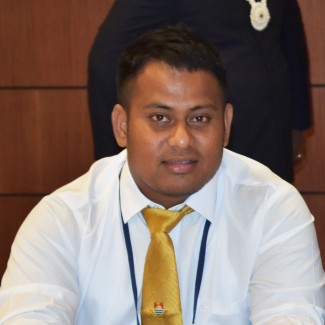
Dr. Neeraj Shankar is an experienced professional with a strong track record in the design, delivery and review of climate adaptation, Loss and Damage (L&D), and disaster management projects across the Pacific and other climate-vulnerable regions. Brings deep expertise in strategy development, policy review, climate risk governance, and institutional capacity strengthening for national governments, regional organisations, and development partners.
Notable work includes supporting the co-development of four L&D projects under New Zealand MFAT’s Addressing Climate Change Loss and Damage Programme, designing and implementing early warning systems, conducting climate and disaster risk assessments, and preparing national Disaster Risk Reduction (DRR) status reports. Also offers specialised experience in Non-Economic Loss and Damage (NELD), including protection of cultural heritage, intergenerational knowledge, human mobility impacts, and social cohesion.
Currently developing the first Pacific-wide regional evidence base for Loss and Damage for SPREP, strengthening the foundation for future L&D programming, reporting and access to climate finance. Recognised for building strong, trust-based relationships with diverse stakeholders, government agencies, regional bodies, community networks and technical specialists, and for facilitating inclusive, culturally grounded, multi-stakeholder consultations.
Safeguard Manager (Consultant) - South Tarawa Water Supply Project (GCF, ADB, WB)
National Climate Change Coordinator - Office of te Beretitenti/ President - Kiribati
Assistant Project Manager - Third National Communication (TNC)
Volunteer - Environment and Conservation Division
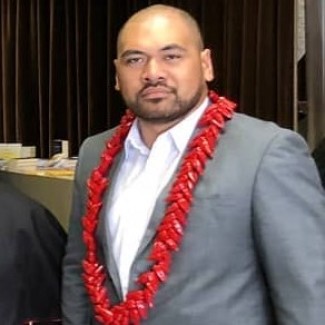
Dr George Carter is a Research Fellow at the Department of Pacific Affairs at the Australian National University (ANU). He is also the Director for the ANU Pacific Institute a large network hub of scholars in the university - connecting and promoting Pacific research, teaching and training at the university.
The broad focus of George’s research interest explores Pacific island peoples’ and states influence and agency in international and regional politics. His research interests explore international politics of (negotiations, security, gender, finance, justice, science and traditional knowledge) climate change, geopolitics and regionalism(s), as well as the foreign policy and diplomacies of small island states in the Pacific. Furthermore, he is interested in indigenous philosophy and non-western international relations that focus on the longstanding history, practices, protocols and principles of Pacific political communities, contributing to Oceanic Diplomacy.
He has undertaken research in multilateral forums including climate change, security, ocean, sustainable development negotiations, as well as in regional organisations and national governments across the Pacific. George teaches university and executive courses in international relations, diplomacy, security, environment and climate change, policy, cultural communication, and Pacific studies.
His research and teaching interests are informed by his education, work experience in the Pacific and upbringing through his proud Samoan Tuvaluan, i-Kiribati, Chinese, British ancestry. He serves his family and communities in Samoa, where he holds the matai/chiefly title of Salā.
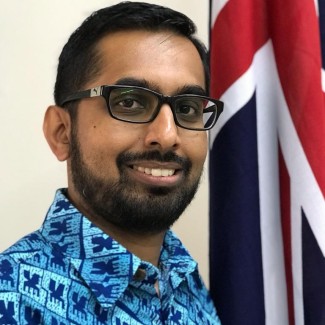
Krishneil Narayan is the Executive Director and Principal Consultant at Sustainable Future Consultancy in Fiji.
As a development professional with 18 years of experience, he specializes in sustainability and climate policy formulation, translating the policies into activities that benefit communities and accessing climate finance for Pacific Island countries.
As an advisor, Krishneil provides his expertise in climate and disaster-resilient development project design, implementation, and evaluations to various governments, NGOs, development organizations, and the private sector.
Krishneil previously worked as a climate change negotiator at the United Nations for over a decade, prioritizing the needs of Small Island Developing States (SIDS) and contributing to the adoption of the 2013 Warsaw International Mechanism for Loss and Damage, as well as the Paris Agreement and the Sustainable Development Goals in 2015.
Previous clients have included: Oxfam Australia, Bread for the World (Germany), Pacific Islands Climate Action Network, UNDP, UN Environment, the Pacific Community (SPC), UK Government (Foreign, Commonwealth and Development Office), New Zealand Government (Ministry of Foreign Affairs and Trade), Fiji Government (Ministry of Women), International Organisation for Migration (IOM).
Joe is an experienced policy advisor and strategist who has worked on climate issues in Australia, New Zealand, Europe and the Indo-Pacific since 206. He is currently working on the NZ Emissions Reduction Plan, National Adaptation Plan and advising on mitigation, Article 6 and International Carbon Markets for NZ's Climate Directorate.
His previous work includes providing diplomatic, strategic and technical advice for Pacific leaders at the United Nations Framework Convention on Climate Change (UNFCCC), providing advice and designing campaign strategies for regional and international civil society organisations (incl. Greenpeace, Caritas, BOGA, Fossil Fuel Treaty), and helping clients achieve their strategic objectives through cross-sector engagement and partnerships.
Joe is a Samoan and has sound understanding of the cultural nuances required to engage with Pacific leaders and communities and has an extensive professional network among Climate professionals, civil society and community groups which enables him to work collaboratively throughout the region to achieve the objectives of his clients and Government partners.
Member of the Chartered Chemist, Royal Society of Chemistry
University of Leeds Research Fellow - Conducted research into the chemistry of atmospheric pollution resulting from power generation through the use of electron accelerators and complex reaction modelling
Principal Consultant for Entec UK Ltd, Northwick, Cheshire, UK
Director for Environmental Intelligence Limited, Leeds, West Yorkshire, UK
Countries of Work Experience: Australia and United Kingdom
Corporate strategy: Emission reduction target for global airline
Enhancing assurance capability: New reporting method for open cut coal mining
Financial risk management: Carbon trading risks and opportunities
Climate change impacts: Risk to food security in Australia for a large food company
Climate adaptation strategy for the Nottinghamshire County Council
Analysis of the European Union Emission Trading Scheme in its first year of operation
Carbon mitigation strategy for the UK Water Utility Sector
Design and development of the EU ETS New Entrant Reserve
Design and operation of a simulation of an emission trading market that allowed 14 UK companies to practice their trading strategies in advance of the UK ETS in 2002